
Expanded Access Program – A Conference Travel Blog Post
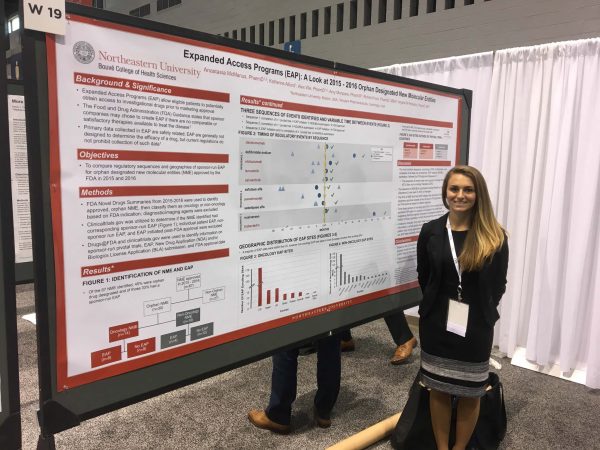 My research project involved looking at when expanded access programs (EAP) for orphan designated new molecular entities were started in comparison to other regulatory events and where the sites of distribution were geographically distributed. An EAP allows patients to potentially obtain access to investigational drugs prior to FDA approval if there are no comparable therapies already available on the market.
This project drew a lot of buzz from attendees because it is important to know when EAP are initiated since it gives some insight as to when companies feel they have enough data to show the efficacy of their drug would help people. It is also interesting to look at where EAP dispensing sites are established because it may be able to tell us a little more about where these patients with rare diseases are or where the company is looking to get approval for their drug.
My most memorable interaction was with someone who had worked on one of the drugs that I researched. I was able to explain to her that the drug she worked on followed an atypical pattern of regulatory events compared to the other therapies and my hypothesis why it was that way.
On that note, from this experience I have definitely learned not only more about how to communicate my research to others but also how to listen and critically think about the questions, insight, and stories people told me about their experiences with this topic as well.
From the feedback provided, this is a topic that does not have a lot of data available, and I think that continuing to explore this topic more will help to provide insight on how EAP can continue to provide therapies for patients that need them.
By Katherine Aflond
Candidate for Doctor of Pharmacy ’19